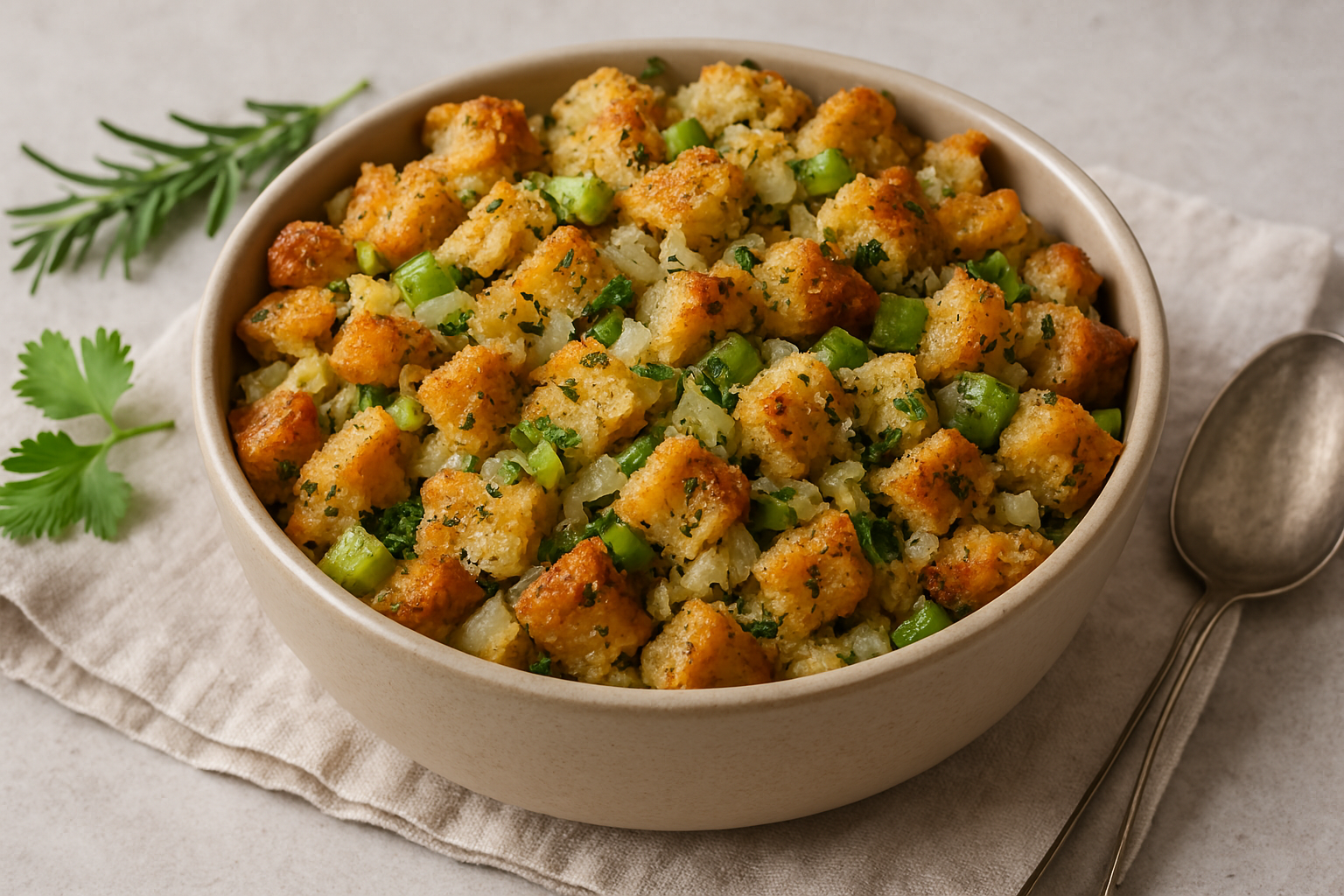
Stuffing lasts 3 to 4 days in the refrigerator when it is cooled within two hours of cooking and kept in an airtight container at 40°F (4°C) or below. Frozen, cooked stuffing holds its best quality for up to 1 month. These windows apply whether the stuffing is homemade, sausage-based, or prepared from a Stove Top box, and they run from the day it was cooked, not the day it was served. Reheat leftovers to an internal temperature of 165°F (74°C) before eating.
How Long Does Stuffing Last in the Fridge?
Cooked stuffing keeps for 3 to 4 days in the fridge. That figure covers most versions of the dish because the perishable ingredients — bread soaked in broth, cooked vegetables, and any meat — all spoil on a similar timeline. If you cannot remember the day you cooked it, treat it as older rather than newer and check it for freshness before reheating.
| Type of Stuffing | Refrigerator Life |
|---|---|
| Cooked homemade stuffing | 3 to 4 days |
| Cooked sausage or meat stuffing | 3 to 4 days |
| Prepared Stove Top (once cooked) | 3 to 4 days |
| Uncooked stuffing mixed with raw poultry or eggs | Cook within 1 day; do not store raw |
| Dry, unopened boxed stuffing mix | Pantry-stable for months past the best-by date |
Stuffing sits at the shorter end of the leftover spectrum. Here is how it compares to other common cooked dishes so you can plan which leftovers to eat first:
| Food Item | Refrigerator Lifespan |
|---|---|
| Cooked Stuffing | 3 to 4 days |
| Cooked Chicken | 3 to 4 days |
| Cooked Rice | 4 to 6 days |
| Cooked Pasta | 3 to 5 days |
| Cooked Vegetables | 3 to 7 days |
Keep the refrigerator at 40°F (4°C) or below and store the stuffing on a shelf rather than in the door, where the temperature swings the most. For more on leftover timelines, see our guide on how long chicken paprikash lasts in the fridge.
Stove Top and Boxed Stuffing
Once you cook Stove Top or any boxed stuffing mix, it follows the same 3-to-4-day refrigerator rule as homemade stuffing — the dry mix becomes perishable the moment you add hot water, broth, or butter. An unopened box of dry mix is a different story: it stays safe in the pantry for months and is usually fine well past its printed best-by date, since the low moisture content leaves nothing for bacteria to grow on. Store opened dry mix in a sealed container away from heat and humidity.
How Long Does Stuffing Last in the Freezer?
Freezing extends stuffing well beyond the fridge window. Cooked stuffing holds its best texture and flavor for about 1 month at 0°F (-18°C). It stays technically safe to eat longer than that at a steady 0°F, but the bread dries out and the flavor fades the longer it sits, so 1 month is the mark to aim for.
| Storage Method | How Long It Stays Best |
|---|---|
| Refrigerator (40°F or below) | 3 to 4 days |
| Freezer (0°F or below) | Up to 1 month |
To freeze stuffing well:
- Cool it completely first. Freezing while warm forms ice crystals that turn the stuffing mushy on thawing.
- Portion before freezing. Single servings thaw faster and let you reheat only what you need.
- Squeeze out the air. Use heavy-duty freezer bags or freezer-safe containers and press out excess air to prevent freezer burn.
- Label and date every package so you can track the 1-month best-quality window.
Thaw frozen stuffing in the refrigerator overnight before reheating.
Factors That Affect Stuffing Shelf Life
Two things decide how long a given batch of stuffing lasts: what went into it and how it was handled after cooking.
Ingredients Used in the Stuffing
The more perishable and moist the mix-ins, the faster the stuffing turns. Vegetarian stuffing made mostly of bread and herbs holds up slightly better than a version loaded with sausage, broth, and fresh vegetables.
| Ingredient | Impact on How Long It Lasts |
|---|---|
| Bread | Absorbs moisture and can turn soggy, shortening shelf life |
| Broth | Adds moisture; a bacteria magnet if not chilled quickly |
| Vegetables | Fresh or cooked, they add moisture that speeds spoilage |
| Meat (sausage, giblets) | Cooked meat is highly perishable; eat within a few days |
| Herbs and Spices | Not a meaningful spoilage factor |
How the Stuffing Was Prepared and Stored
Cooking thoroughly and chilling fast are what keep stuffing safe. Stuffing cooked to a safe temperature and refrigerated within two hours lasts noticeably longer than a batch left sitting out on the counter.
| Factor | Effect on Longevity |
|---|---|
| Cooking Temperature | Must reach 165°F internally to kill harmful bacteria |
| Cooling Speed | Refrigerate within two hours (one hour if the room is above 90°F) |
| Storage Container | Shallow, airtight containers cool faster and block moisture and odors |
| Fridge Temperature | At or below 40°F (4°C); warmer temperatures accelerate spoilage |
Storing and Handling Leftover Stuffing
Good storage is what turns the 3-to-4-day window into reality instead of a best case. Follow these steps as soon as the meal is over.
- Cool briefly, then refrigerate within two hours. Spreading the stuffing in a shallow container helps it cool quickly and evenly.
- Seal it airtight. Airtight containers or zip-top bags keep out moisture and fridge odors. If you do not have a container, wrap tightly in plastic wrap followed by a layer of aluminum foil.
- Store it on a shelf, not the door. Door temperatures fluctuate every time the fridge opens.
- Label and date each container so you always know what is still inside the safe window.
Vacuum sealing removes more air and helps preserve texture and flavor, but it does not extend the 3-to-4-day safety limit — that window is about bacterial growth, not air exposure, so honor it regardless of how well the stuffing is packaged.
Checking Stuffing for Freshness
Stuffing can look fine and still be unsafe, so run through these checks before reheating. When more than one sign shows up, or when in doubt, throw it out.
| What to Watch For | What It Means |
|---|---|
| Sour or rancid smell | A clear sign the stuffing has spoiled — discard it |
| Mold | Any green or fuzzy spots mean it goes in the trash immediately |
| Color change | Gray or green tones signal bacterial growth |
| Slimy or overly dry texture | Both indicate the stuffing has turned |
| Off taste | If it looks fine but tastes wrong, stop eating it |
Safe Practices for Reheating
Reheat stuffing to an internal temperature of 165°F (74°C) to make it safe. Use a food thermometer, or at minimum make sure it is steaming hot all the way through.
- Oven: Cover the stuffing with foil in an oven-safe dish and heat at 350°F (175°C) for about 20 to 30 minutes, until it reaches 165°F. The foil keeps it from drying out.
- Microwave: Use a covered microwave-safe bowl and heat in short bursts for 2 to 3 minutes, stirring halfway through to eliminate cold spots where bacteria survive.
| Method | Setting | Time |
|---|---|---|
| Oven | 350°F (175°C) | 20 to 30 minutes |
| Microwave | High, covered | 2 to 3 minutes (stir halfway) |
Reheat only the portion you plan to eat. Each cool-and-reheat cycle gives bacteria another chance to grow, so avoid warming the same stuffing repeatedly. For more on reheating leftovers, see how to reheat a refrigerated lobster cake.
Creative Ways to Use Leftover Stuffing
Rather than letting stuffing languish in the fridge, put it to work in new dishes. These ideas use it up well within the 3-to-4-day window.
| Meal Idea | Description |
|---|---|
| Stuffing Muffins | Press stuffing into a muffin tin and bake until crisp for portable snacks or breakfast. |
| Stuffed Vegetables | Hollow out bell peppers, zucchini, or tomatoes, fill with stuffing, and bake until tender. |
| Stuffing Hash | Fry stuffing with diced potatoes, onions, and peppers until crispy and golden. |
| Frittata | Fold stuffing into beaten eggs with sautéed vegetables and cook for a savory breakfast. |
| Comfort Casserole | Layer stuffing with leftover turkey or chicken and mixed vegetables, then bake. |
| Crunchy Chicken Coating | Press stuffing onto chicken breasts as a crumb crust and bake until cooked through. |
You can also stir stuffing into simmering chicken or vegetable broth near the end of cooking for a hearty soup, mix it with ground beef for stuffing-studded burgers, or fold it into a breakfast wrap with scrambled eggs and cheese. If you like planning leftovers ahead, our guide on salad shelf life covers another common batch food.
Frequently Asked Questions
Does stuffing go bad?
Yes. Cooked stuffing is perishable and goes bad within 3 to 4 days in the refrigerator, faster if it is left at room temperature. Its bread, broth, vegetables, and any meat all support bacterial growth, so it does not keep like dry pantry items do.
How long is homemade stuffing good for in the fridge?
Homemade stuffing keeps for 3 to 4 days when refrigerated within two hours of cooking in an airtight container at 40°F or below. To keep it longer, freeze it for up to a month.
How long does sausage stuffing last in the fridge?
Sausage or other meat stuffing lasts the same 3 to 4 days in the fridge. Because it contains cooked meat, do not push past that window, and be sure it reached 165°F when first cooked.
How long is Stove Top stuffing good for in the fridge?
Once prepared, Stove Top stuffing lasts 3 to 4 days in the refrigerator, just like homemade. An unopened box of the dry mix stays good in the pantry for months and is typically fine past its best-by date.
How long does uncooked stuffing last?
Dry, uncooked stuffing mix is shelf-stable for months in a sealed container. However, if you have mixed raw stuffing with raw poultry, eggs, or broth, do not store it raw — cook it within a day and refrigerate any leftovers promptly.
Can I leave stuffing out at room temperature?
No longer than two hours. Perishable foods like stuffing must be refrigerated within two hours, and within just one hour if the surrounding temperature is above 90°F. After that, bacteria multiply to unsafe levels.
How long can you store stuffing in the freezer?
Cooked stuffing keeps its best quality in the freezer for about one month at 0°F. It stays safe longer at a steady 0°F, but the texture and flavor decline over time. Cool it completely before freezing, and thaw it in the fridge overnight before reheating. For a related storage guide, see storing apple puree baby food safely in the fridge.
Can I reheat stuffing multiple times?
It is best to reheat stuffing only once. Every cool-and-reheat cycle gives bacteria another opportunity to grow, so warm only the portion you will eat and bring it to 165°F.